How to Track Cryptocurrency Like a Pro: Tools Every Beginner Must Use
 Zamy
Zamy
Everyone who ignores fundamentals of tracking crypto is prone to be driven by emotions. In this article we’ll tell you how to track crypto financials, why it’s a fundamental skill and help you become FUD-resistant.
Why Do You Need Basic Cryptocurrency Tracking Skills?
Some react to sharp price spikes on social media, others follow advice from friends, and many simply fear “missing out.” The problem is that the cryptocurrency market operates 24/7, without weekends or pauses, and emotionally driven decisions, unless backed up with data, almost always lead to mistakes. That’s why crypto tracking is not an optional feature — it’s a fundamental skill.
Tracking in crypto is a way to support intuition with data. It allows you to see not just the price of an asset, but the broader context: liquidity, trading volume, network activity, transaction fees, fund flows, and the behavior of large market participants. It’s like having X-ray glasses that actually let you see through everything.
To avoid confusion, let’s define a few basic terms upfront:
- Portfolio tracker — a tool that shows the value and structure of your crypto holdings.
- Blockchain explorer — a website that allows you to view transactions and balances on public blockchains.
- Watchlist — a list of assets you monitor regularly.
- Alerts — notifications about price movements or on-chain events.
- Gas fees — transaction fees paid to execute operations on a blockchain.
In this article, we’ll explain what “tracking cryptocurrency” actually means in practice and which tools every beginner should know in 2026.
What Does It Mean to “Track Cryptocurrency”?
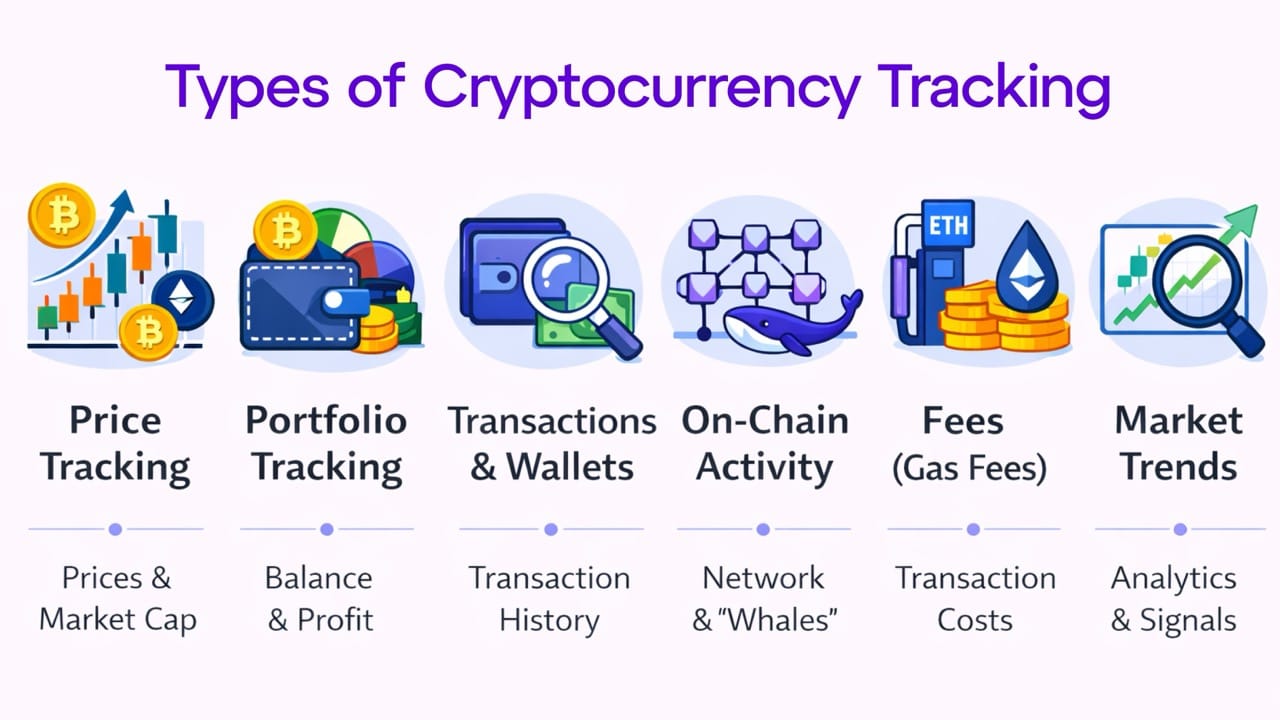
Tracking Prices
The most obvious level is monitoring prices. Bitcoin, Ethereum, and thousands of altcoins have not only a price, but also market capitalization, trading volume, and dominance metrics. Price alone rarely tells the full story. A price increase can happen on very low liquidity, while a drop may simply reflect a broader market move.
This is simplest level of crypto tracking, for it you can use:
- Tradingview;
- Token Terminal, Coinmarketcap, CoinGecko;
- Twitter Price Alert bots;
- Just simply looking up “bitcoin price now”;
If you want to track crypto price like a pro you can use TradingView with MACD, RSI, Ichimoku and Bollinger bands to see exactly how the price behaves. Keep in mind — simply seeing the price won’t cut it, you need to see the price chart too to be able to tell how the price behaves.
Tracking Your Own Assets
The next level is monitoring your personal portfolio. It’s important to understand not just your current balance, but also how it changes over time: how much you invested, how your portfolio value evolved, what share each asset represents, and whether you’re in profit or loss. Without this, it’s impossible to manage risk or make informed decisions.
Tracking Wallets and Transaction History
Cryptocurrencies are transparent by design. Every transaction is recorded on the blockchain and can be reviewed at any time. Wallet tracking allows you to see where your funds went, what fees were paid, whether you received airdrops, or how you interacted with smart contracts.
Suppose you want to learn what crypto people buy, but you want to watch the wallet of a successful trader or a big player. For that purpose you can use wallet tracking, and in order to identify such a big player you look up their transaction history and follow breadcrumbs of data to see where they lead to and how you can profit from it. One of the popular tools to do so is Arkham, which lets you visualize transactions, see money flows and essentially hunt crypto whales.
Tracking on-chain activity
A more advanced level involves observing what’s happening inside the network itself. Movements of large wallets, rising fees, user activity, and network congestion often provide signals before they are reflected in price.
The easiest way to think about crypto tracking is as continuous monitoring of a financial system in which you participate directly.
Best Tools for Tracking Cryptocurrency as a Beginner
CoinMarketCap — Global Market Overview
CoinMarketCap is the starting point for most users. It aggregates prices, market capitalization, trading volumes, and trending tokens. Beginners can create an account, add assets to a watchlist, and set alerts for significant price changes. This builds a basic understanding of the market without overwhelming detail.
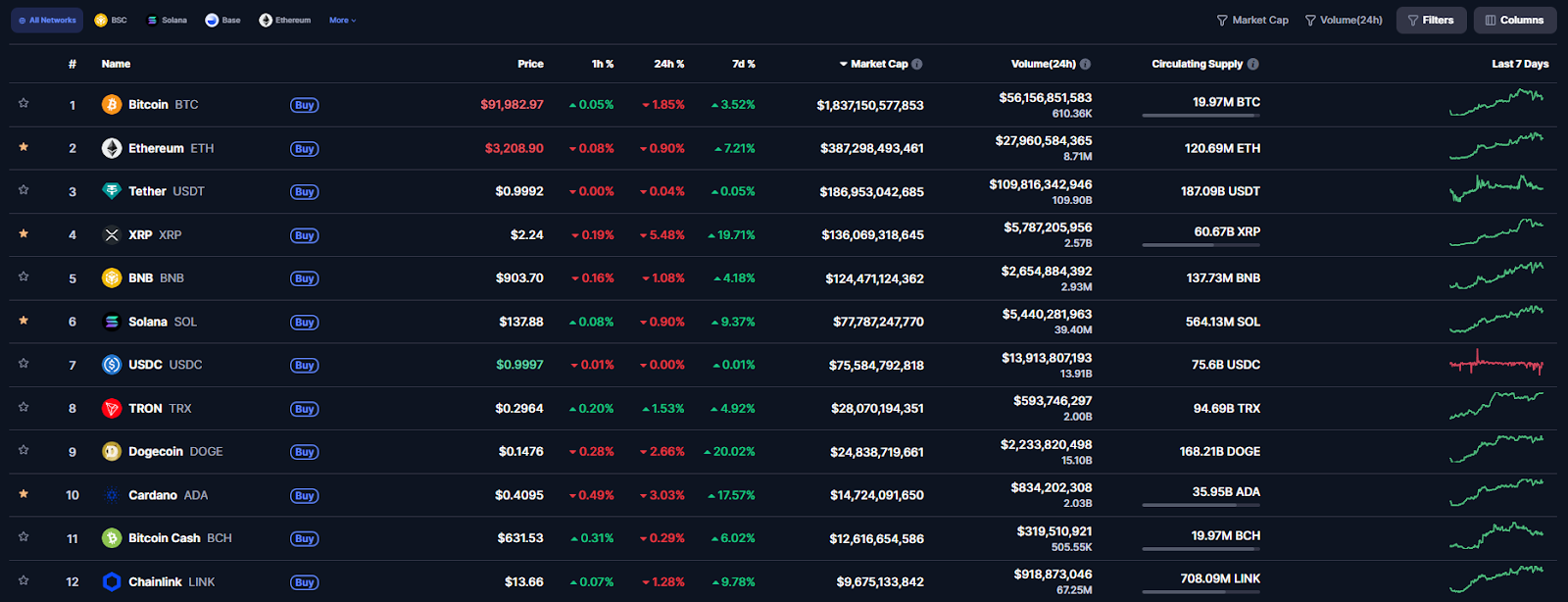
CoinGecko — Deeper Analytics and Historical Data
CoinGecko is often used alongside CoinMarketCap. It’s especially useful for analyzing historical performance, comparing liquidity across exchanges, and evaluating community activity. The “Markets” tab helps determine where a token is actually being traded, rather than just listed.
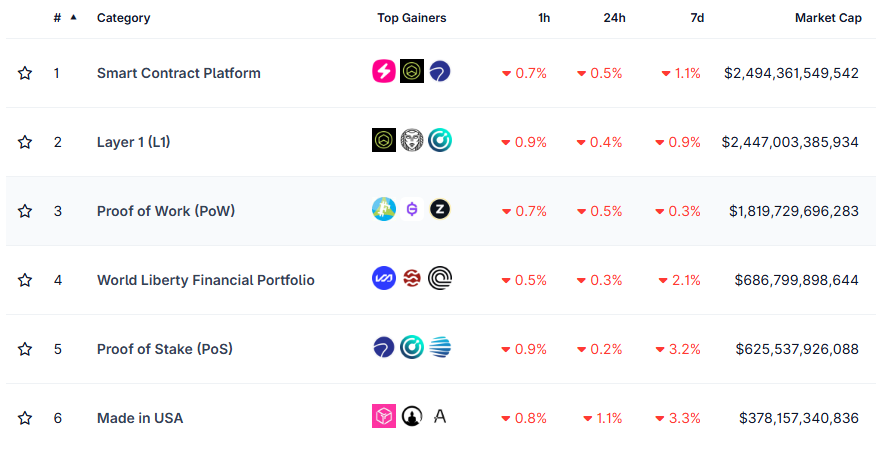
Dexscreener — Real-Time DEX Token Tracking
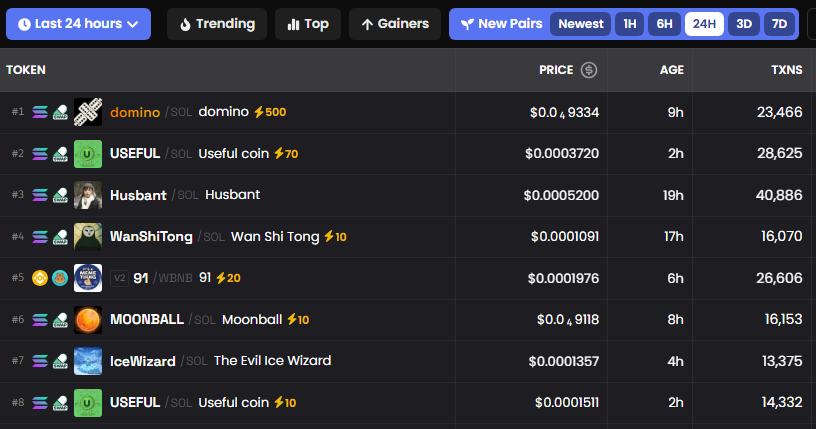
Dexscreener is particularly useful for monitoring new tokens and decentralized markets. It shows liquidity pools, trading volume, and sharp price movements in real time. For beginners, it’s primarily an observation and risk-assessment tool rather than a trading platform.
TradingView — Beginner-Friendly Price Charts
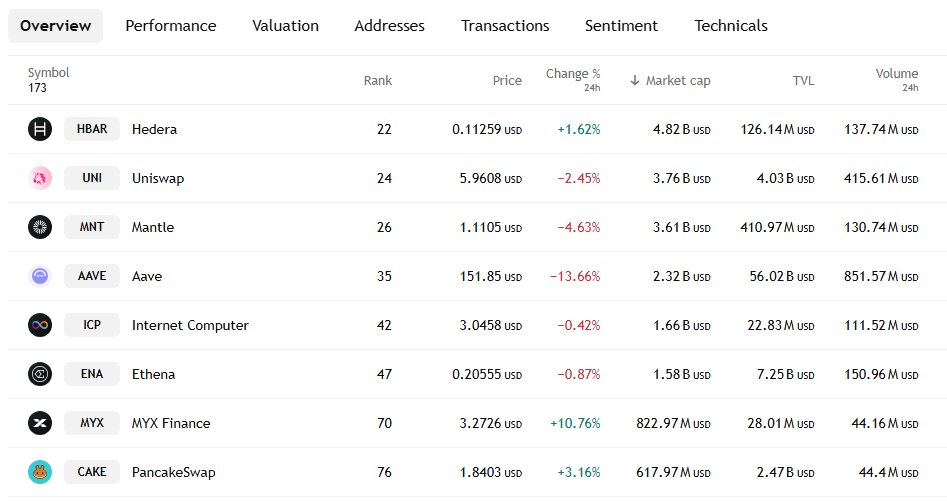
TradingView is widely used across both crypto and traditional markets. Beginners only need to understand candlestick charts, timeframes, and how to set basic alerts. Simple indicators like moving averages or RSI help identify trends without complex technical analysis.
Blockchain Explorers — Understanding Transactions
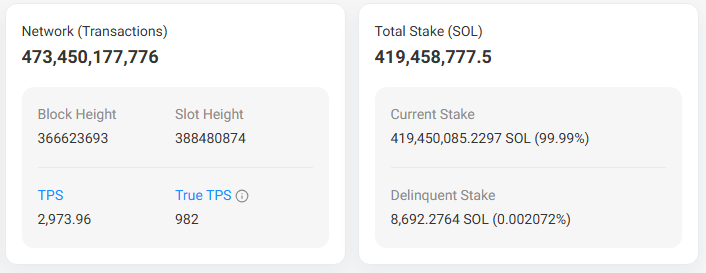
Blockchain explorers allow you to literally “read” the network. For Ethereum, this is Etherscan; for Solana, Solscan; for Bitcoin, Blockchain.com. By pasting a wallet address, you can see balances, transaction history, and fees paid. This is a core skill that greatly increases user confidence.
Portfolio Trackers — One Control Panel
Portfolio trackers such as CoinStats, Zerion, and DeBank let you see all your assets in a single interface. You can enter holdings manually or connect a wallet in read-only mode.
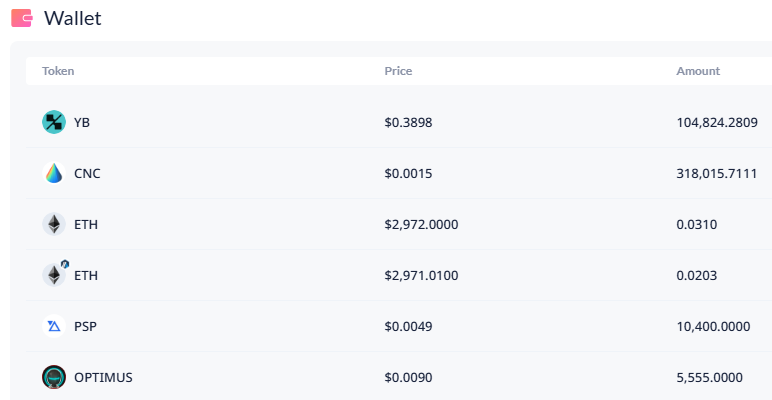
The result is a clear picture of your portfolio and its allocation.
Gas Fee Trackers
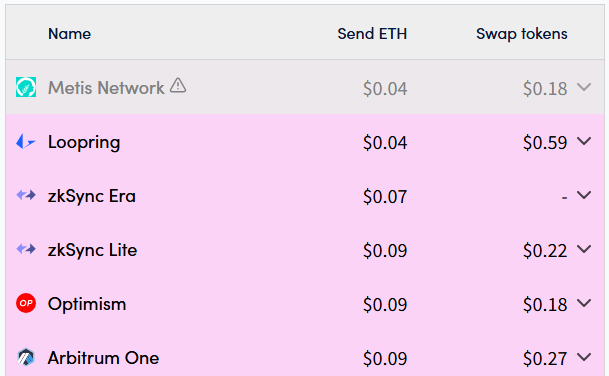
Transaction fees are a hidden but important factor. Tools like Layer2Fees and built-in gas trackers on Etherscan show how much an operation costs at any given moment. This helps you choose the right time and network for transactions.
On-Chain Analytics and Whale Tracking
On-chain analytics focus on real actions rather than price alone. Platforms like Dune Analytics, Nansen, Arkham, DeFiLlama, and CertiK Skynet aggregate public blockchain data into readable metrics: fund flows, large wallet activity, protocol usage, and potential risks.
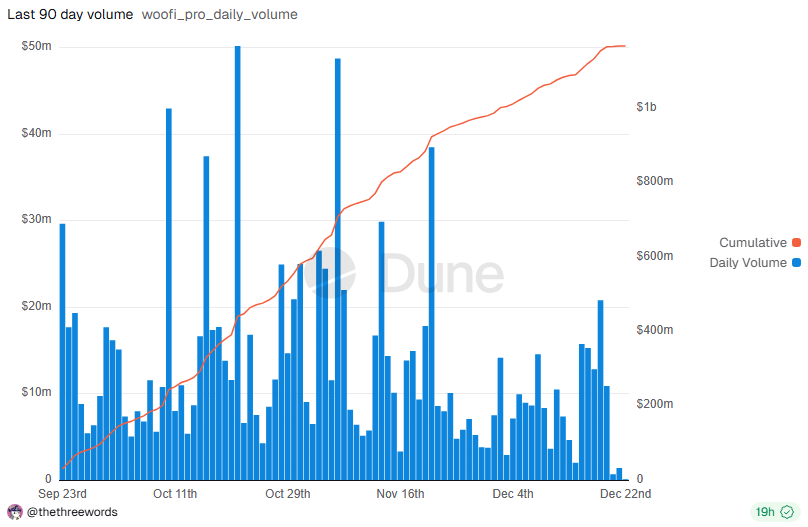
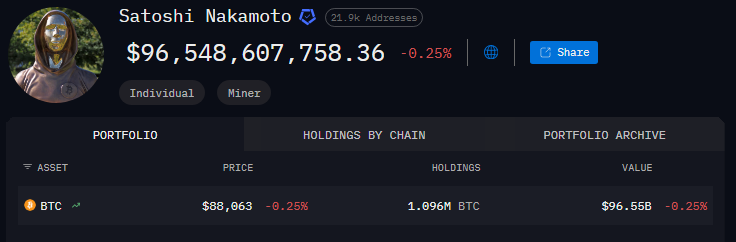
For beginners, it’s not necessary to build custom dashboards. Ready-made panels and summaries are enough to track overall trends, network load, or unusual activity.
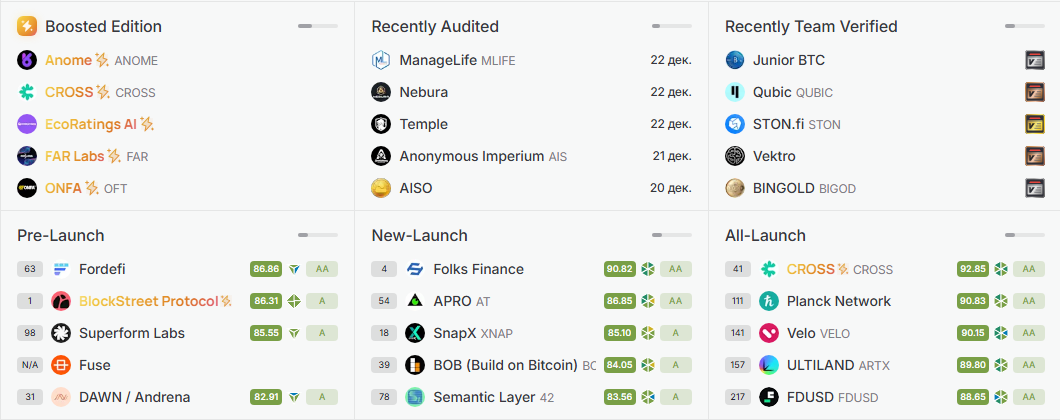
Liquidation heatmaps, available through services like CoinGlass, show where leveraged positions are being force-closed and help explain sudden price movements.
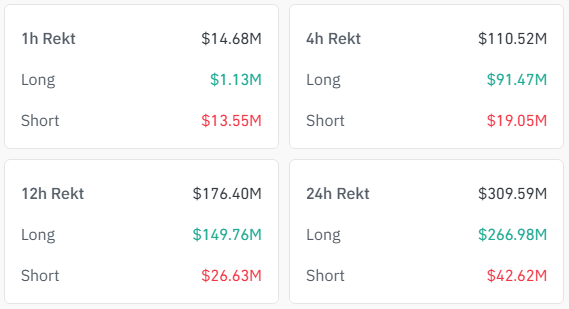
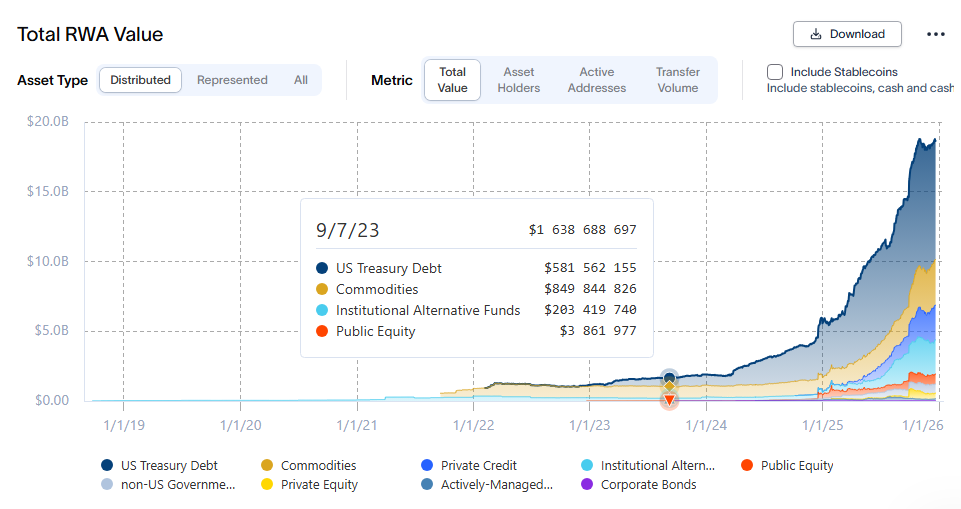
Suppose you want to dig deeper and know where traditional stock market money meets crypto. That’s called RWA’s, which stands for Tokenized Real-World Assets — a share of the crypto market where regular stocks, assets and classical resources like gold are represented with their digital counterparts. For understanding tokenized real-world assets (RWA), rwa.xyz provides a clear overview of the sector’s size and structure without requiring deep technical knowledge.
To assess the DeFi market as a whole, DeFiLlama aggregates total value locked (TVL) across protocols, blockchains, and sectors. This helps identify where liquidity is actually concentrated and which ecosystems are growing or declining.
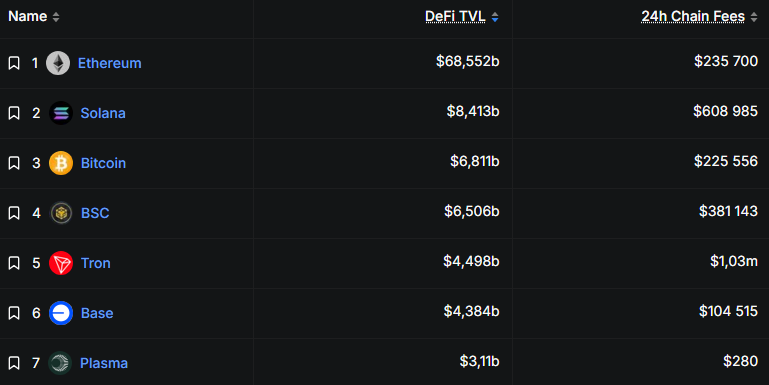
For beginners, DeFiLlama is useful because it provides a structural market view rather than token-level noise.
How to Track Your First Crypto Portfolio
The easiest way to start is with a portfolio tracker. Choose a tool (for example, CoinMarketCap), then add Bitcoin, Ethereum, stablecoins, and a few altcoins.
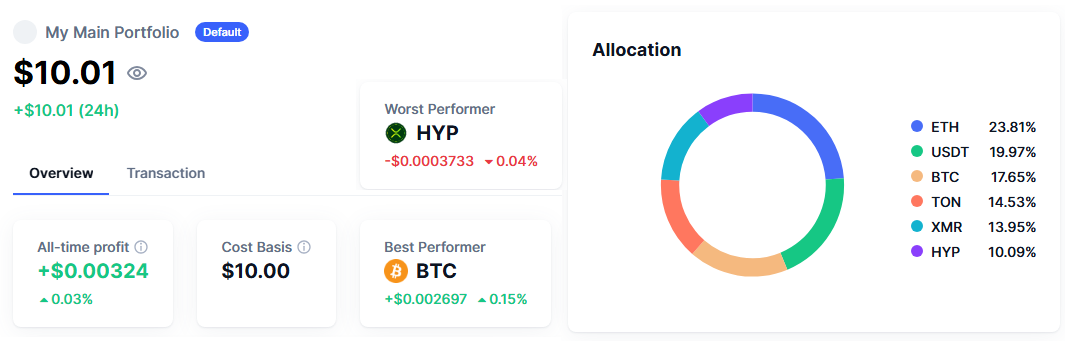
Even a symbolic $10 portfolio can be used as a learning index. By splitting a small amount across several assets and observing how it changes over time, you learn to think structurally instead of reacting to individual price spikes.
Price and volume alerts allow you to follow important events without checking the market constantly. Over time, patterns become visible on a daily, weekly, and monthly basis.
How to Track Transactions and Wallet Activity
Tracking wallets is essential for both verification and security. Using Etherscan (for Ethereum, as an example), you simply paste a wallet address to see token transfers, internal transactions, and fees paid.
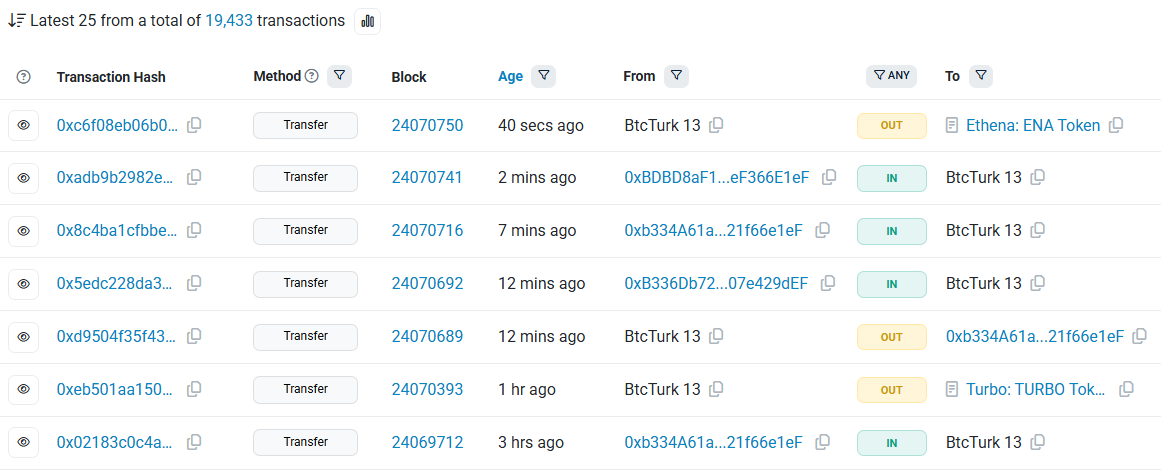
This helps you understand exactly what happened to your assets, even if your wallet interface isn’t very clear.
How to Track the Market Without Getting Overwhelmed
Effective tracking is not about using more tools — it’s about focus. A watchlist of 5–10 assets is far more useful than one with hundreds. Checking data once a day or once a week and focusing on key metrics helps avoid information overload.
For quick visual orientation, many users rely on Coin360 — a heatmap that shows movements across major crypto assets and sectors. It allows you to assess overall market sentiment in seconds without diving into individual charts.
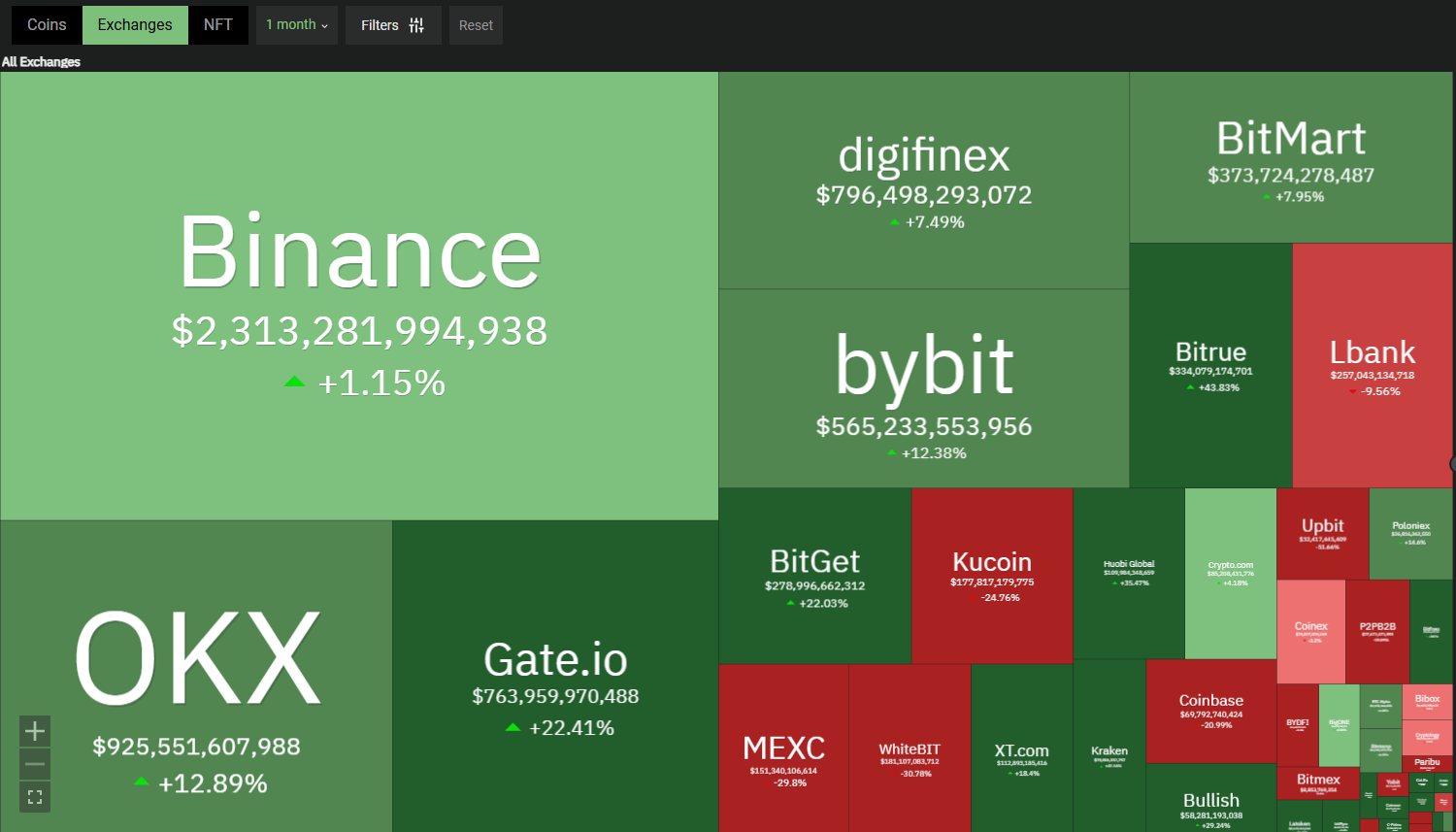
For beginners, Coin360 is best used as a navigation tool, not for making trading decisions.
Common Beginner Mistakes When Tracking Crypto
One of the most common mistakes is relying on opinions from social media instead of data. Short-term noise, loud predictions, and emotional reactions often distort reality and lead to impulsive decisions. For instance: KOL’s and crypto influencers are getting paid to promote certain coins or projects, and incentivised to overhype them so always take them with a grain of salt and always DYOR — do your own research.
Another frequent error is trying to track too many tokens at once. An oversized watchlist reduces focus and makes it harder to identify truly meaningful movements.
Beginners also often ignore fees and liquidity, focusing only on price. In reality, these factors determine how easily you can enter or exit a position without significant losses.
Finally, relying on a single data source creates a false sense of completeness. Good tracking always compares information from multiple tools — market aggregators, portfolio trackers, and blockchain explorers — resulting in a more objective view and fewer mistakes.
FAQ — Tracking Crypto for Beginners
What is the easiest way to start tracking cryptocurrency?Use CoinMarketCap or CoinGecko for prices and a portfolio tracker with manual input.
Do I need to connect my wallet to tracking apps?No. For learning and basic monitoring, manual portfolios or read-only wallet connections are enough.
Are portfolio trackers safe?Yes, as long as you never share private keys and only use read-only access.
How can I track transactions if I lost my transaction history?Through a blockchain explorer — all transactions are stored on the network and linked to wallet addresses.
How do I track new tokens and trends?Use DEX analytics and watchlists instead of relying solely on social media.
Do I need to pay for tracking tools?Most basic features are free. Paid plans are only needed for advanced analytics.
Summary
Tracking cryptocurrency is a skill that develops over time. By using basic tools such as CoinMarketCap, portfolio trackers, and blockchain explorers, beginners gain real control over their assets. More advanced analytics can be added later, but the foundation remains the same: data over emotions.
For additional context and practice, explore related materials like Top 10 undervalued coins in December, Top metrics in crypto, and practical tools such as the GoMining reward calculator:
- https://gomining.com/blog/top-10-undervalued-cryptocurrencies-december-2025
- https://gomining.com/blog/top-key-metrics-in-crypto-to-track
- https://gomining.com/calculator
- https://gomining.com/collections
Smart tracking makes the crypto market clearer — and participation in it more conscious and secure.