How the Stablecoin Sector Works
 Zamy
Zamy
A beginner-friendly guide that explains how stablecoins work, why they stay near one dollar, and what keeps them stable behind the scenes.
What You’ll Learn
- What stablecoins actually are, and why they’re used so widely across crypto
- How the main stablecoin models work in practice, and what keeps each one close to its target price
- Where stablecoins show up in real crypto use today, from sending money and holding value to moving between apps
- The less obvious risks to watch for, including de-pegging, reserve transparency, smart-contract failures, and wallet restrictions
- A simple way to look at any stablecoin and understand what questions to ask before using it
Introduction
In a space where crypto prices can change by the hour, one type of asset tries to stay almost still. Stablecoins are the part of crypto that is built not to move very much at all. They are designed to stay close to one dollar so people can send, save, and settle without watching every price tick.
For someone sending money abroad, or living with a fast-weakening local currency, that steady line can be the difference between knowing what your balance will buy tomorrow and guessing. Inside crypto apps, stablecoins also act like a digital cash balance that makes it easier to move between services without constant recalculation.
This guide walks through how stablecoins work, the main models that keep their price near a target, where that stability can slip, and how to read any stablecoin with clear eyes so you can decide how it fits into your own use of crypto.
Table of Contents
- What Is a Stablecoin and Why Does It Exist?
- The Three Main Stablecoin Models
- Inside the Stablecoin Sector Today
- Key Risks: Pegs, Reserves, and Regulation
- How To Read Any Stablecoin With Clear Eyes
- Conclusion
- FAQ
What Is a Stablecoin and Why Does It Exist?
A stablecoin is a digital token designed to stay close to the price of a national currency, usually one U.S. dollar. Unlike other crypto assets, it isn’t meant to move much. Its price stays near that target because something in the background — often cash or other assets — is there to support it. This is what people mean when they talk about “the peg”: the stablecoin’s link to a fixed reference value.
That steady value is what makes stablecoins useful in everyday life. Someone sending money abroad can transfer funds in minutes and know the amount will still be worth roughly the same on arrival. In places where local currencies lose value quickly, people sometimes keep part of their savings in stablecoins to help protect daily purchasing power. And inside crypto apps, traders use them as a calm place to wait between positions without leaving the ecosystem.
Put simply, stablecoins exist to make digital value easier to move without worrying about constant price swings.
Micro takeaway: Stability is their purpose. The peg is the mechanism that keeps that stability in place.
The Three Main Stablecoin Models
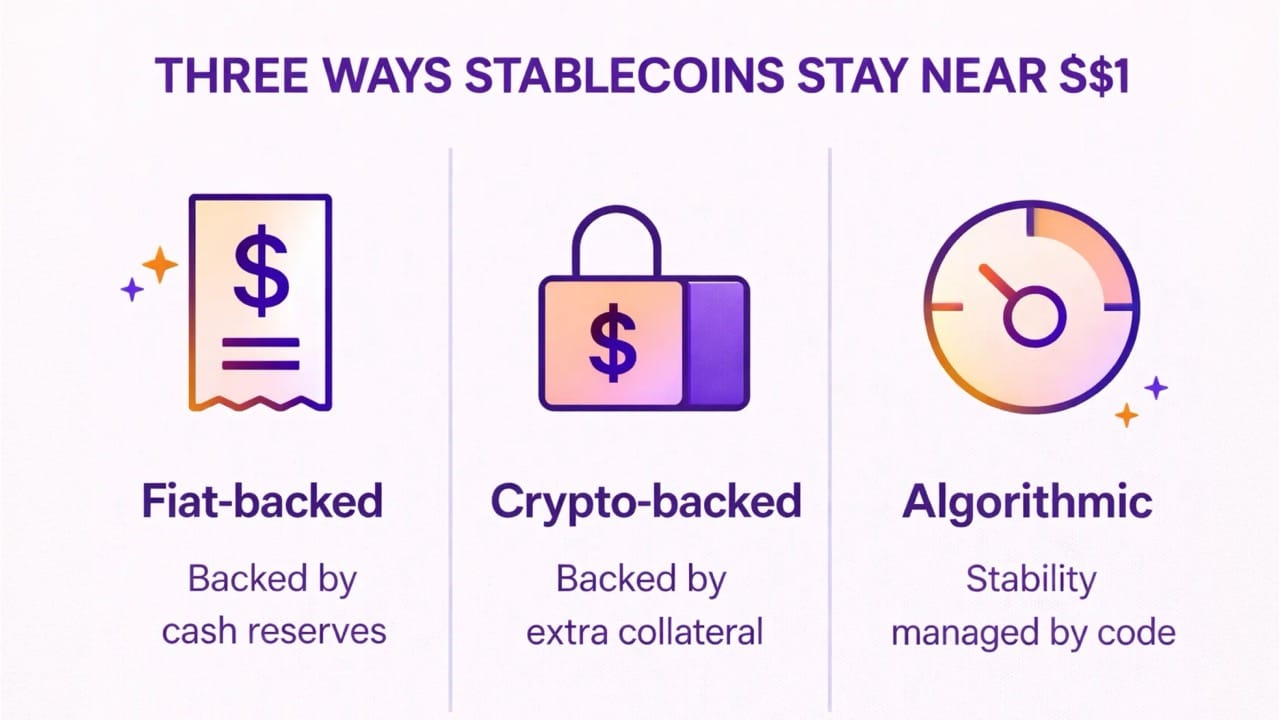
Stablecoins use different designs to stay near one dollar. The models below show what keeps each type steady — and where the pressure shows up when markets move fast.
Fiat-Backed Stablecoins
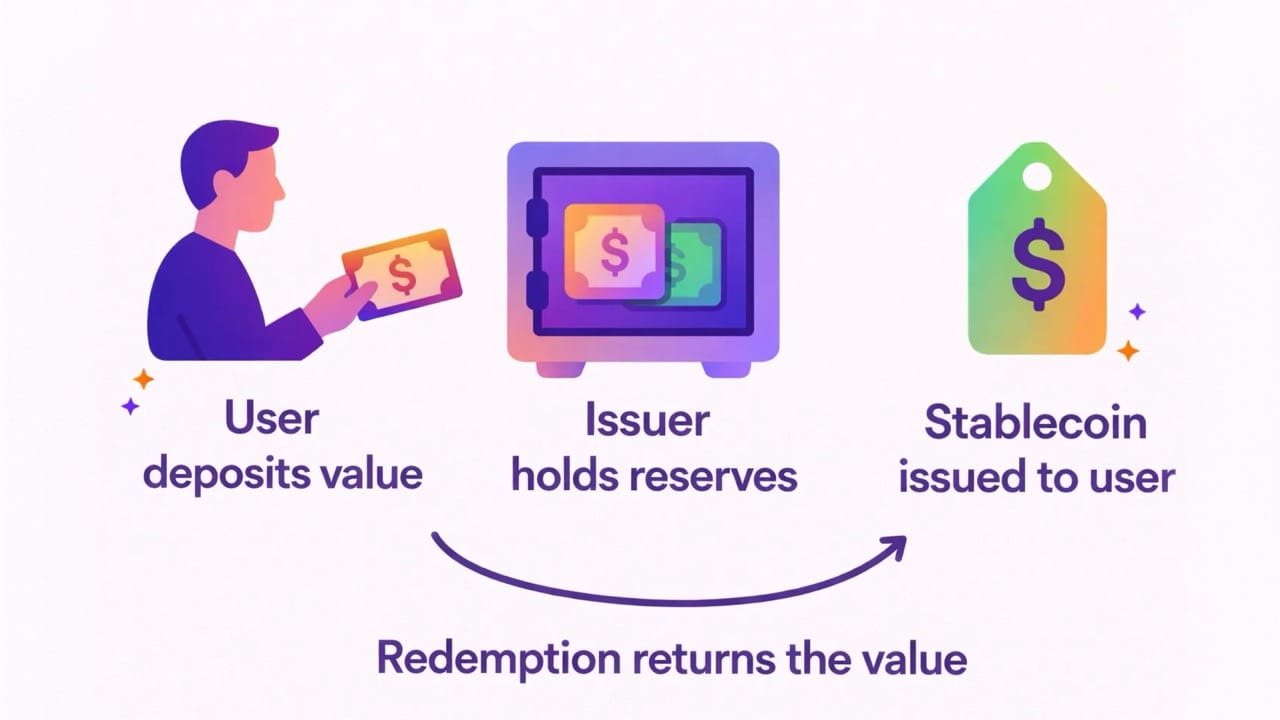
Fiat-backed stablecoins work a bit like a coat-check ticket: you hand something in, and you receive a claim you can return later.
A company holds cash or cash-like assets in reserve accounts — usually U.S. dollars or short-term Treasury bills. For every dollar stored, one token exists, and when users redeem tokens for cash, the supply shrinks to match the reserves.
If the price slips below one dollar, traders can buy the token at a discount and redeem it for the full amount, a loop that usually pulls the price back toward its target.
Crypto-Backed Stablecoins
Crypto-backed stablecoins take a different approach. Instead of using bank accounts, they rely on crypto assets locked inside smart contracts. Think of it like pawning jewelry for quick cash: you deposit something worth more than what you borrow.
Users lock a larger amount of crypto as collateral and mint (create) a smaller amount of stablecoins. That extra margin is what keeps the system steady. In case the collateral value drops too far, the protocol can automatically sell part of it to keep the stablecoin fully backed, which helps the price stay near one dollar even when markets move quickly.
Algorithmic Stablecoins
Algorithmic stablecoins aim to keep their price near $1 without traditional reserves or large collateral buffers. Instead of holding assets in the background, they rely on code to react to changes in demand.
They behave much like a thermostat in a room. When things get too hot, the system cools them down. When things get too cold, it adds heat. In stablecoins, that “temperature” is price.
When demand rises and the token trades above one dollar, the system increases supply. When demand falls, it reduces supply or creates incentives for users to remove tokens from circulation — for example, by swapping stablecoins for discounted bond or reward tokens that only become valuable if the system later recovers.
This setup can work when markets are calm and demand shifts gradually. But when confidence drops suddenly, the adjustments may come too slowly. That weakness became clear during the collapse of TerraUSD (UST) in 2022, when the price fell faster than the design could respond.
2026 Update: The rise of yield-bearing stable-value tokens
Over the past couple of years, a new type of stable-value token has started to appear. These designs still aim to stay close to one dollar, but instead of sitting quietly in a wallet, they pass a small portion of their earnings back to the holder.
The idea comes from something simple: the assets that back many stablecoins — such as dollars or short-term U.S. Treasuries — naturally generate interest. With traditional fiat-backed stablecoins, that interest goes entirely to the issuer. Yield-bearing versions share part of it with users while still trying to keep the token’s price steady.
Projects use different methods to make this work. Some rely on conservative strategies built into smart contracts; others use market setups designed to keep price movements neutral. The details vary, but the appeal is clear. As more people looked for a stable place to hold value without giving up the chance to earn a bit extra, these tokens began to gain traction in 2024 and 2025.
Inside the Stablecoin Sector Today
Stablecoins now move enormous amounts of value across public blockchains. A recent analysis from a16zcrypto shows that stablecoins processed around $46 trillion in on-chain transactions last year.
When analysts filter out activity generated by software moving funds inside protocols — rather than people sending money — the estimate still lands near $9 trillion.
Even that adjusted figure puts stablecoins in the same league as global payment systems like Visa and PayPal.
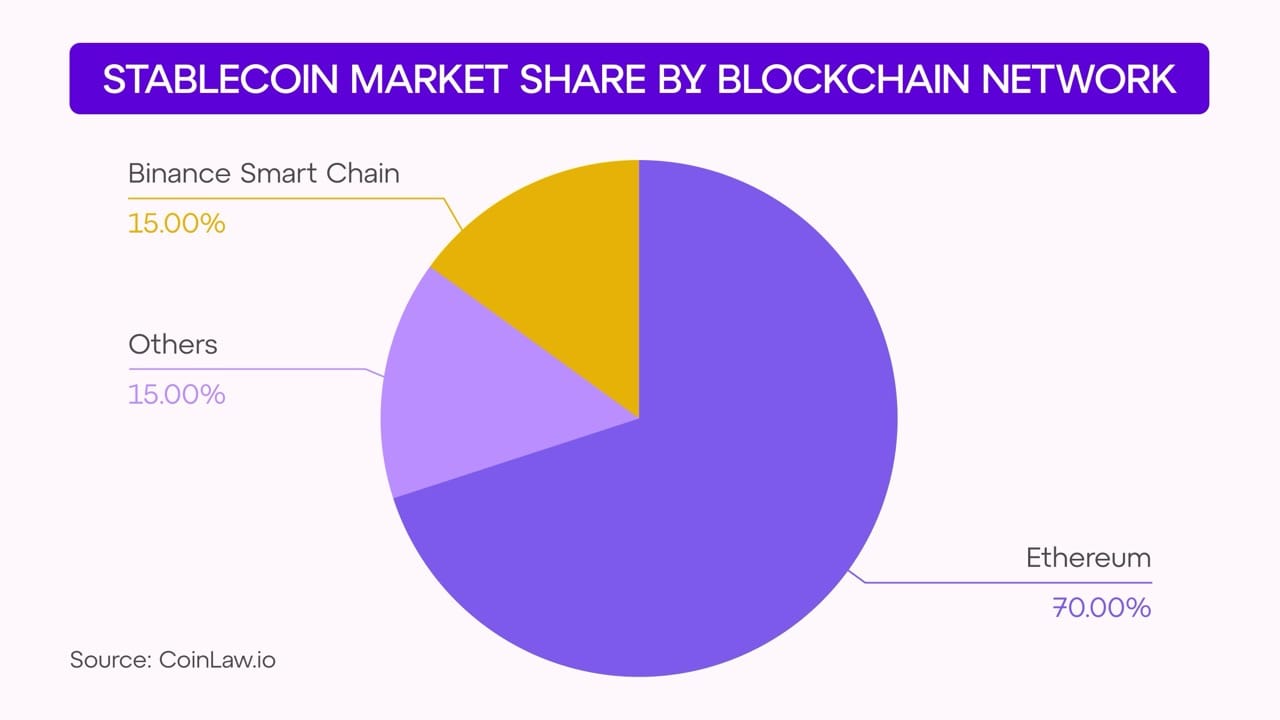
Daily activity varies by network and market conditions, but the scale reflects clearly that stablecoins are used constantly for payments, transfers, and settlement across major chains like Ethereum.
Similar real-world adoption is reported in Turkey, Argentina, Brazil, Vietnam, and several African countries; people use dollar-linked stablecoins to help protect purchasing power or move money when access to U.S. banking is limited or local currency loses value quickly.
A Forbes analysis adds the business perspective:
“In Latin America and Southeast Asia, stablecoins are helping businesses hedge against inflation and access hard currency equivalents with more predictability.”
This mirrors what many companies experience in high-inflation regions — stablecoins function as a digital version of holding dollars, with faster settlement and fewer banking hurdles.
Inside crypto applications, stablecoins show up in practical ways. They’re used as the main currency in many lending markets, such as Aave and Compound, where people borrow or supply assets using tokens that aim to stay near one dollar.
They’re also widely used in payment tools and non-custodial wallets that support stable-value transfers, including MetaMask, Phantom, and wallets built on Tron, where stablecoins make it easier to send value without tracking constant price changes.
Taken together, the settlement data, country-level adoption, and regulatory attention all point to the same conclusion: stablecoins have become one of the primary ways value moves through the crypto ecosystem today.
Key Risks: Pegs, Reserves, and Regulation
Stablecoins feel steady, until the moment they don’t. When the price drifts from one dollar, even slightly, does it mean something is breaking, or is it normal? Each model reacts differently, which is why the same price dip can mean completely different things depending on the stablecoin.
1. When the price slips from $1 (de-pegging)
A small wobble doesn’t mean a collapse. But it does show which mechanism is doing the heavy lifting:
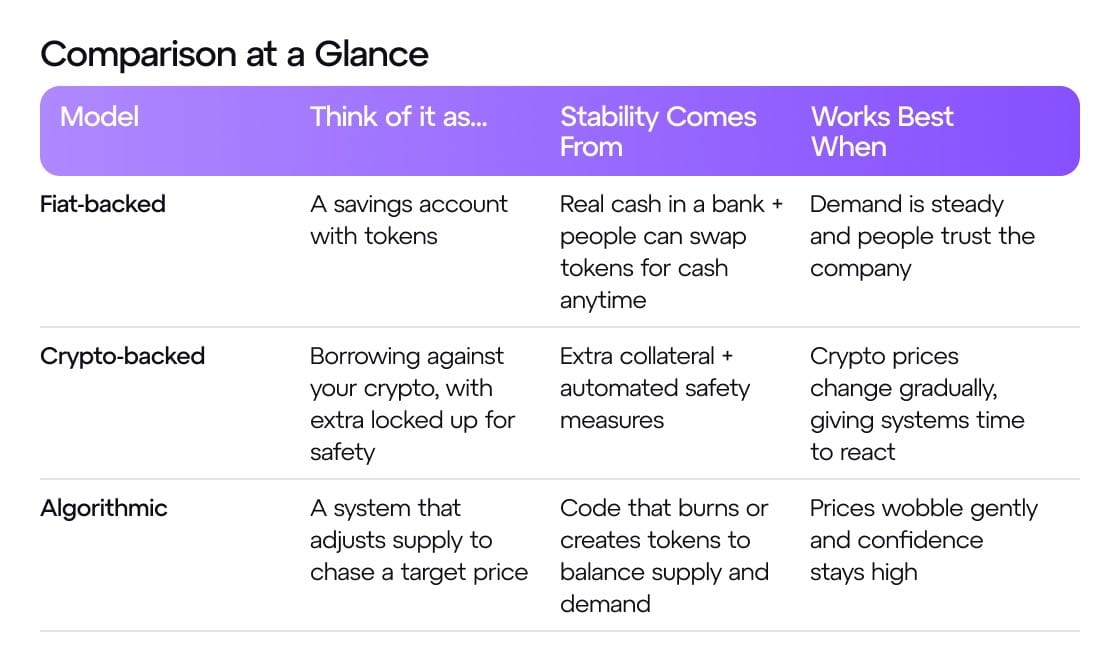
- Fiat-backed tokens: Usually bounce back quickly because people can buy them cheaply and redeem them for the full dollar.
- Crypto-backed tokens: Lean on extra collateral to stay upright during volatility.
- Algorithmic tokens: Stay stable only when demand moves slowly; sudden shifts make it harder for them to catch up.
2. How strong the backing really is (reserves & transparency)
A stablecoin is only as steady as the assets behind it — and how clearly those assets are reported.
Some issuers publish frequent, detailed breakdowns of their reserves. Others reveal far less, which leaves room for doubt. When the market doesn’t know what backs the token, even a rumor can pull the price away from its peg.
Check how often a stablecoin publishes independent reports. Clear, regular disclosures strengthen confidence. Silence weakens it.
3. What can go wrong inside crypto-backed designs (collateral & code)
These designs remove banks from the picture, but introduce new dependencies:
- how quickly the system sees prices
- how fast it can sell collateral
- whether the market has buyers at that moment
When the market is calm, these mechanisms work smoothly. When prices fall too quickly or liquidity disappears, the system may not react in time — even if the design itself is sound.
In other words: sometimes it’s the market that breaks first, not the stablecoin.
4. When a token can be frozen (censorship / freeze risk)
Some fiat-backed stablecoins include a feature that lets the issuer freeze specific tokens if required by law enforcement.
Your wallet still holds the token, but you cannot move it until the freeze lifts.
Self-custody protects your private keys — not always the asset itself.
5. Rules that are still being written (regulatory uncertainty)
Governments are still deciding how stablecoins should handle reserves, disclosures, and redemptions.
As these rules evolve, the same stablecoin may behave slightly differently across jurisdictions, or issuers may need to update how their systems work.
Why this matters
Stablecoins stay near one dollar because of their design, their backing, and the confidence people place in them.
Knowing where each model can come under stress helps you understand price movements with more context — and see why some tokens snap back quickly while others take longer or struggle altogether.
How To Read Any Stablecoin With Clear Eyes
A simple way to understand any stablecoin is to check the few things that actually decide how it behaves under stress. You don’t need to know every internal detail; you just need to know what supports it, who’s in charge of that support, and how easy it is to see what’s happening behind the scenes.
Here are three questions that give you a clear picture:
1. What backs it?
Every model anchors its price differently:
- Fiat-backed tokens: supported by reserves like cash or Treasury bills.
- Crypto-backed tokens: supported by extra collateral locked in smart contracts.
- Algorithmic tokens: supported by supply rules that adjust as demand changes.
Each structure steadies the price in its own way — and each has its own pressure points when the market moves quickly.
2. Who controls it?
Control isn’t always obvious.
- Some fiat-backed issuers can freeze specific tokens if required by regulators.
- Crypto-backed systems rely on code and automated liquidations rather than a company.
- Algorithmic designs depend on steady demand for their rules to work as intended.
Knowing who (or what) can intervene tells you how the token will behave when conditions aren’t calm.
3. How transparent is it?
Stability becomes easier to trust when you can see the support behind it. Some stablecoins publish frequent reserve reports or show collateral on-chain. Others reveal far less, which makes it harder to judge whether the peg has strong backing or just strong assumptions.
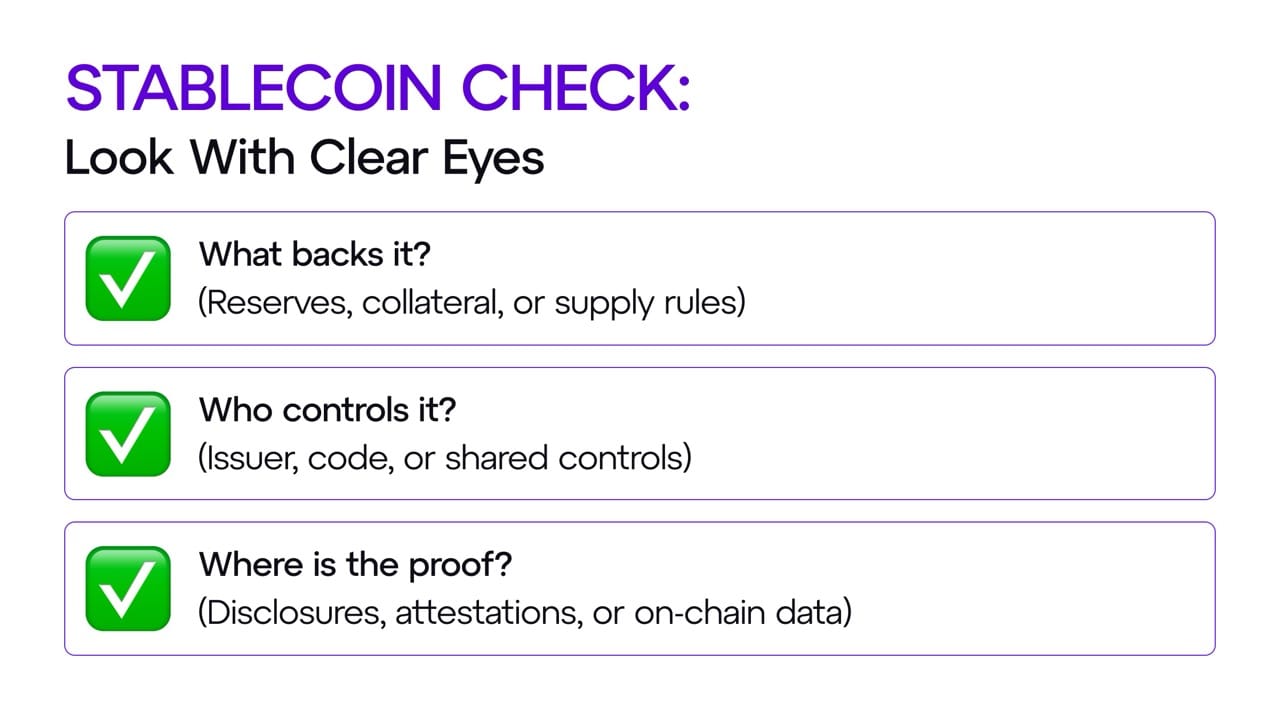
Even though no checklist can predict every outcome, these three questions help you read any stablecoin with more context. You begin to see why a token usually stays near one dollar, where it might come under stress, and how its design influences what happens when the market isn’t calm.
Conclusion
Stablecoins were created to make digital value feel steady. They maintain their place in the crypto ecosystem by staying close to one dollar while everything around them moves more quickly. Their designs vary, but the idea behind each model is the same. Stability depends on what backs the token, how the system responds to changes in demand, and how transparent the structure is.
Seeing the risks alongside the benefits makes this stability easier to read. Peg moves, reserve concerns, smart-contract behavior, and freeze controls all shape how a stablecoin behaves during market stress. These points do not remove their usefulness, but they help set realistic expectations for how they function.
Stablecoins now support payments, remittances, savings, and activity across many crypto apps. Their steady value helps people move funds without tracking constant price swings. Understanding how that steadiness is created offers a clearer view of where stablecoins fit in the wider digital economy and how they may evolve over time.
Frequently Asked Questions
1. Why do stablecoins stay near one dollar?
Because each design has a mechanism that pulls the price back toward its target — reserves for fiat-backed tokens, extra collateral for crypto-backed tokens, and supply adjustments for algorithmic models. The method varies, but the goal is the same: stay close to $1.
2. Why do some stablecoins briefly trade at $0.99 or $1.01?
Small moves often happen during busy market periods or when lots of people redeem at once. What matters is how quickly the price returns to its target, not the tiny move itself.
3. Can a stablecoin lose its peg completely?
Yes. It’s rare for major fiat-backed stablecoins, more common in under-collateralized or algorithmic designs. Understanding what backs the token helps you judge the risk more clearly.
4. How do I check if a stablecoin is well-backed?
Look for regular, independent reports on the reserves or collateral. If an issuer shares very little information, it’s harder to know what supports the token.
5. What does “collateral” mean in crypto-backed stablecoins?
It’s the crypto locked behind the stablecoin. Users deposit more value than they mint, creating a buffer that helps keep the price steady during market swings.
6. Can a stablecoin in my wallet be frozen?
Some centralized issuers can freeze specific addresses if required by law enforcement. Your keys still work, but the token can’t move. Crypto-backed designs usually don’t have this control.
7. Are algorithmic stablecoins safe to use?
They work when demand stays steady, but they’re the most fragile model when confidence drops quickly. If predictability is important to you, understand this limitation before relying on them.
8. Which stablecoin should beginners start with?
There’s no universal answer. Many beginners choose fiat-backed stablecoins because the backing is easier to understand. Crypto-backed options offer transparency on-chain but come with their own mechanics and risks. The best starting point depends on what you value: simplicity, transparency, or decentralization.