Bitcoin Trading Strategies: Beginner-Friendly Guide to Common Practices
 Zamy
Zamy
Bitcoin scares beginners not because it is “too complex,” but because there is too much noise around it. Some promise quick 10x returns, others warn about total losses, and most people start trading without any plan at all. This is exactly where trading strategies come in — not as magic formulas, but as a way to bring order to chaos.
Bitcoin is volatile by nature. The price can rise 10% in a single day and fall just as fast. For an unprepared person, this is stressful. For a trader, it is a working environment. The difference is simple: a trader has a system — when to enter, when to exit, and how much they are willing to lose.
It is important to clarify right away: everything below is educational material, not financial advice. The goal of this article is understanding, not buy or sell signals.
Before we continue, here is a short mini-glossary:
- Long — a bet that the price will go up
- Short — a bet that the price will go down
- Spot trading — buying real BTC
- Indicators — tools on charts (RSI, MACD, etc.)
- Volatility — how fast and how strongly the price moves
- Support and resistance — price levels where the market often pauses
What Does “Trading Bitcoin” Actually Mean?
Spot Trading
The concept is simple. You buy real Bitcoin and can sell it later at a higher or lower price. No borrowing, no complex mechanics. This is often considered the best start for beginners.
Leverage Trading — Why Beginners Get Burned
Leverage allows you to trade with more money than you actually have. It sounds attractive, but it is a loss accelerator. A 2–3% move against you can wipe out your entire deposit. To be honest and direct: leverage is not for beginners.
Long vs Short
- Long — you make money if BTC goes up
- Short — you make money if BTC goes down
On spot markets, beginners usually use only long positions — and that is more than enough at the start.
Timeframes Explained
- Long-term — months and years
- Swing trading — days to weeks
- Day trading — within one day
- Scalping — minutes or seconds
Scalping is immediately crossed out here. For beginners, it almost guarantees losses.
The Safest and Most Beginner-Friendly Bitcoin Trading Strategies
1. HODLing — The Original Strategy
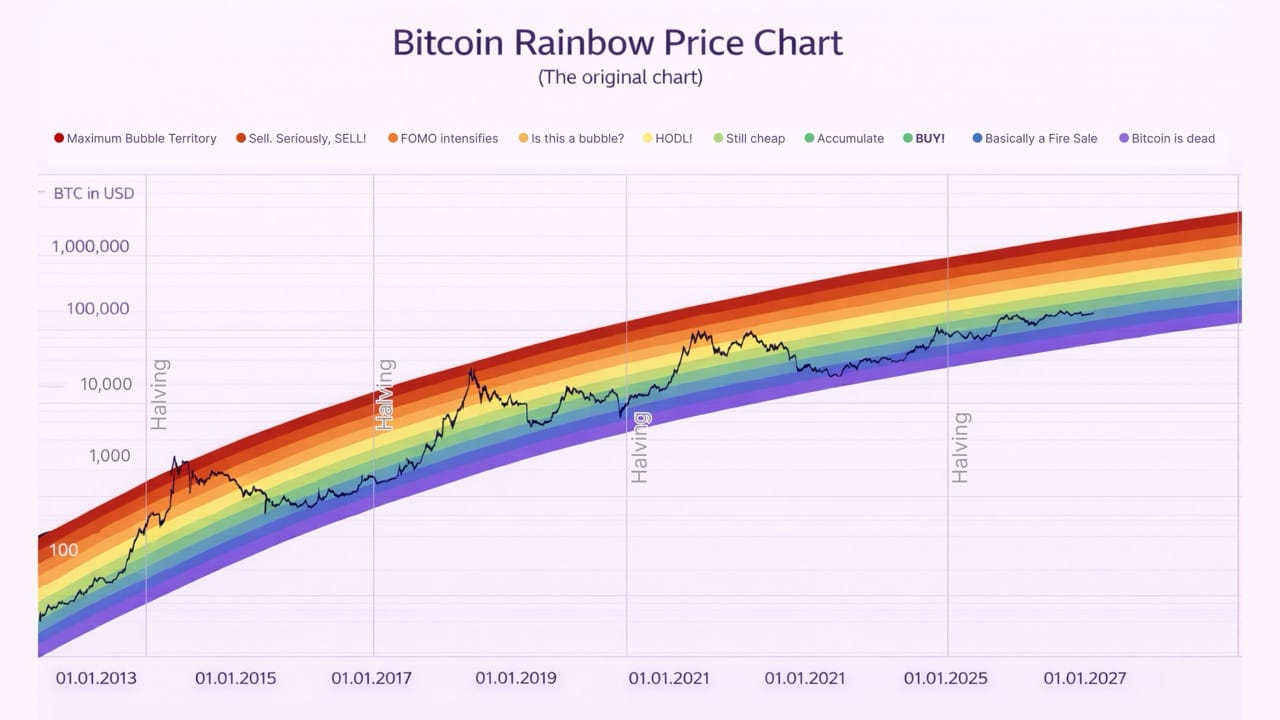
You buy Bitcoin and simply hold it. Historically, this has been one of the most reliable strategies. It requires no skills, causes minimal stress, and works well for people who think in years, not days. Many investors use visual tools like the bitcoin rainbow chart guide to understand where the market is within the cycle.
2. Dollar-Cost Averaging (DCA)
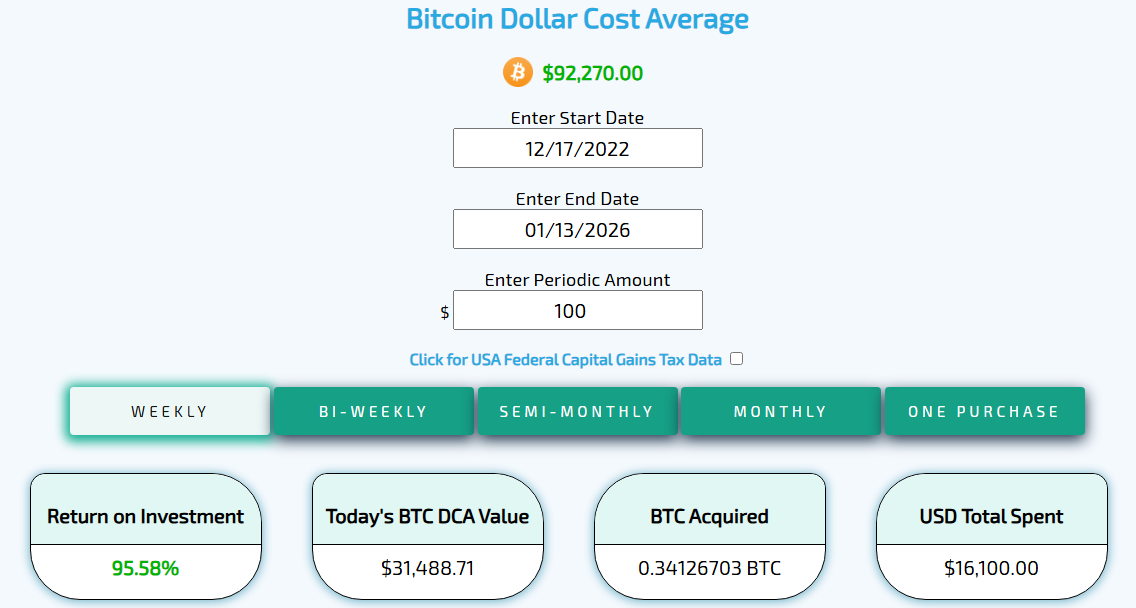
DCA (Dollar-Cost Averaging) means buying small amounts of Bitcoin regularly, regardless of price. Expensive today — you buy. Cheaper tomorrow — you also buy. Over time, the average entry price smooths out, and emotions disappear. This is one of the most popular beginner strategies and is explained in detail in this article.
3. Support and Resistance Trading (Beginner Chart Basics)
Bitcoin often “remembers” price levels where it previously stopped. These levels are called support and resistance. The logic that most traders follow is simple: they buy closer to support and take profit closer to resistance.
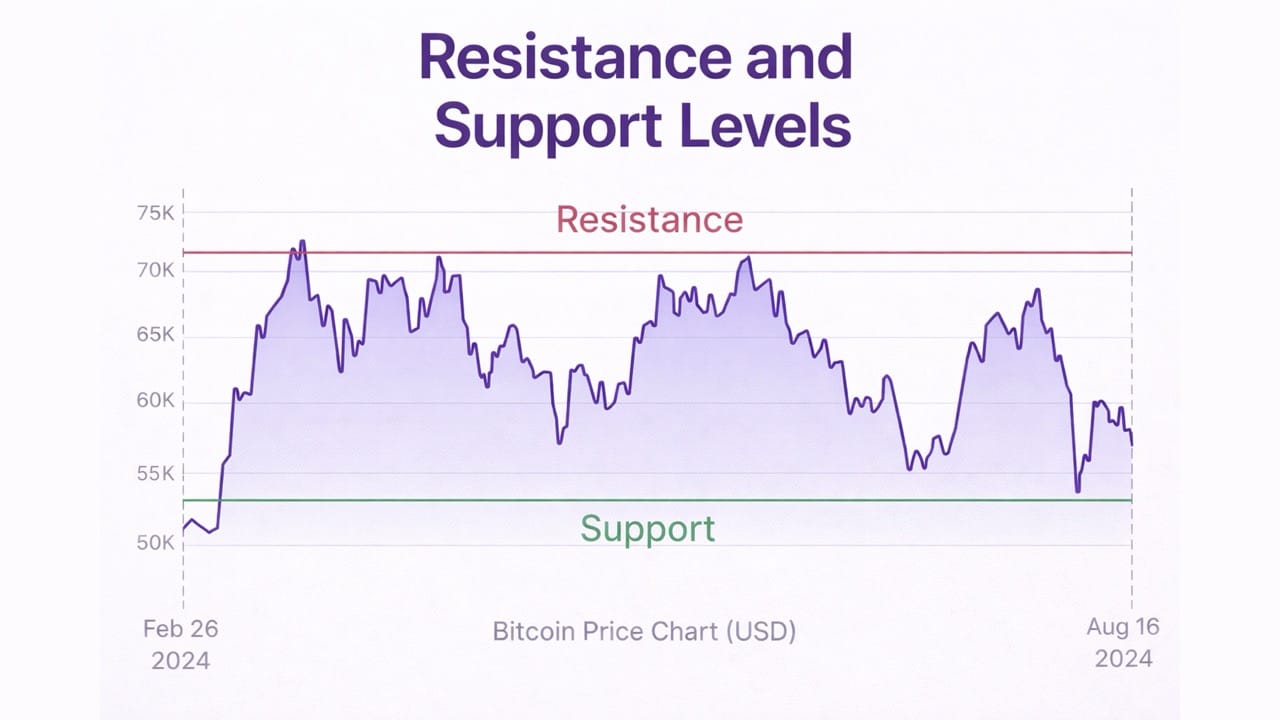
On charts, this looks like horizontal lines between which the price moves. For beginners, this might be an excellent starting point.
4. Trend Following — Simple and Effective
One of the most basic trading rules sounds boring but works: don’t trade against the market. If the price is above a long-term moving average (for example, the 200-day MA), the market is considered bullish. In such conditions, looking for buys makes more sense than trying to catch tops.
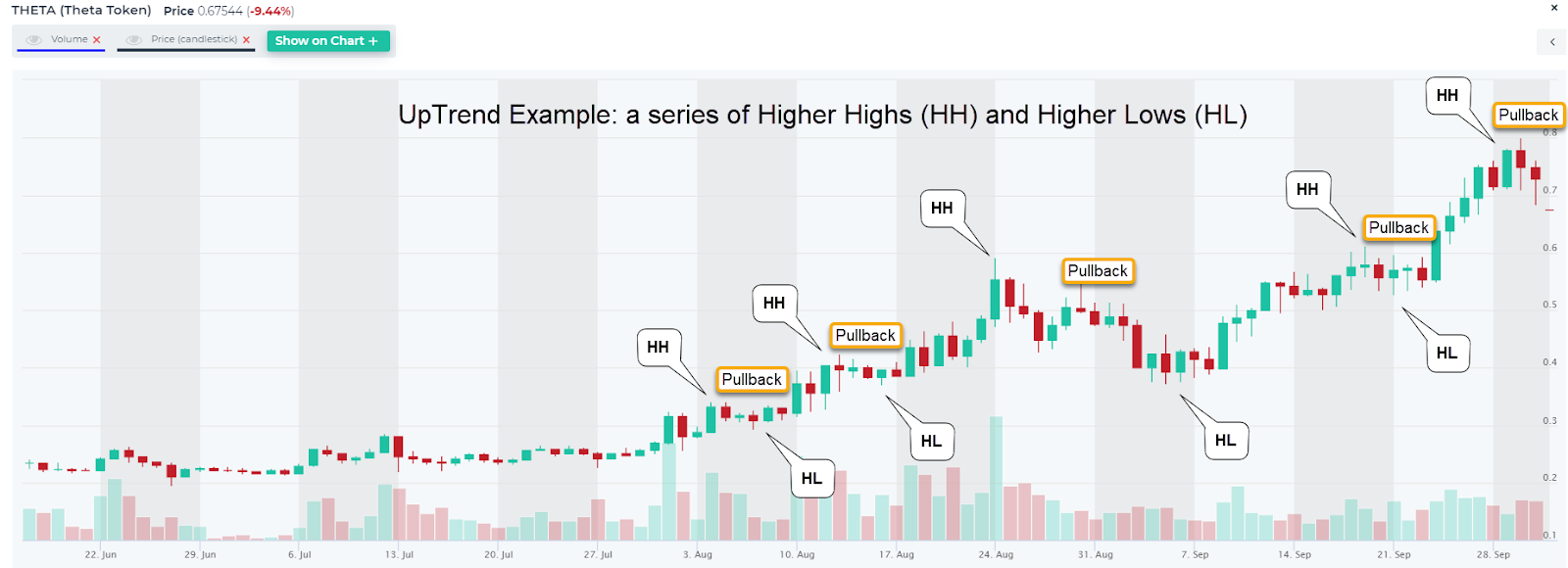
A classic uptrend forms higher highs (HH) and higher lows (HL). This is the basic skeleton of a trend — no indicators or complex math required.
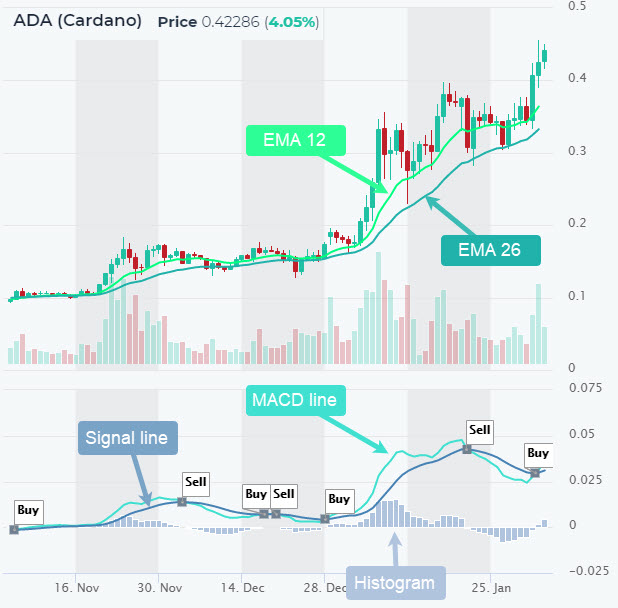
5. Momentum Strategies: RSI and MACD Without Complexity
RSI or Relative Strength Index shows whether the price is overbought or oversold: low values under 20 mean asset is oversold; values over 80 mean asset is overbought and you can expect correction.
MACD or Moving Average Convergence/Divergence helps to see shifts in momentum: when it «twists» from red to green usually it means the market changed the direction from bearish to bullish. The height of bars MACD shows represents how strong the current trend is.
These are not “money buttons,” but hints that work best when combined with price charts.
6. Breakout Trading
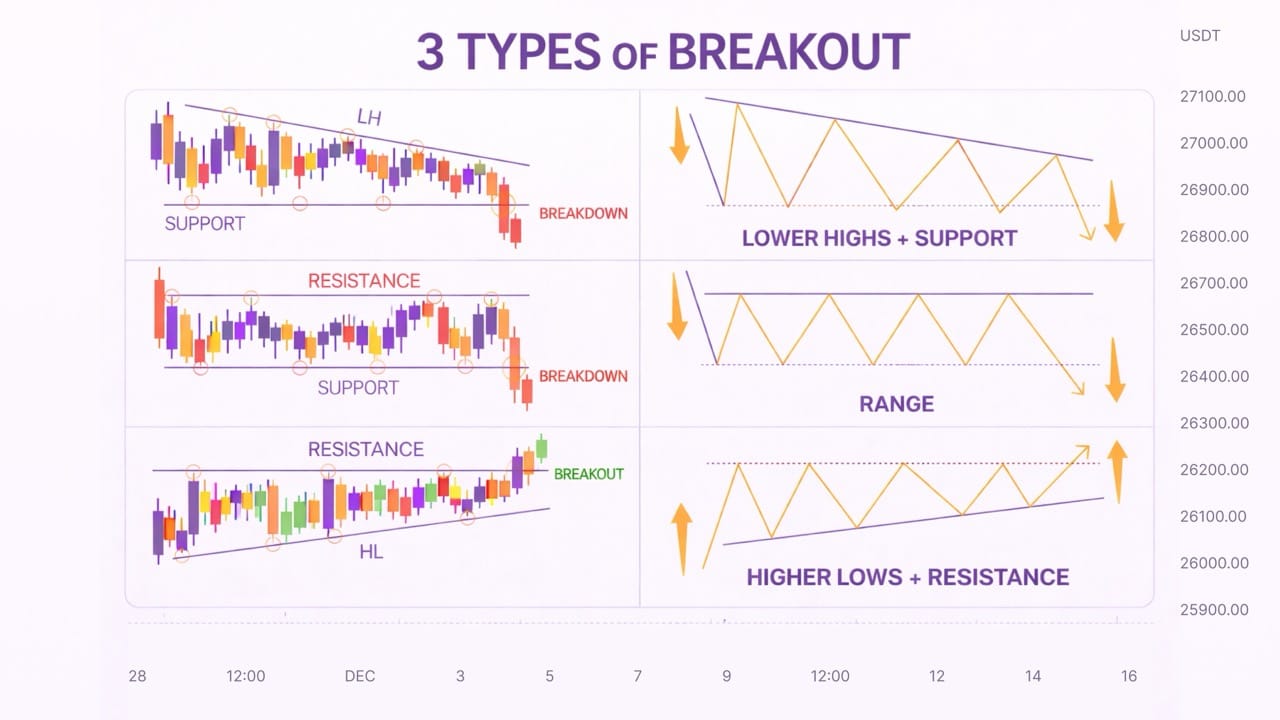
When the price pushes against one level for a long time and then breaks through it, a new move often begins. Traders enter after the breakout and always place a stop-loss in case the price returns back.
7. News-Driven Trading — Caution for Beginners
ETF decisions, regulation news, and macroeconomic data can move Bitcoin sharply. For beginners, these situations are dangerous: volatility spikes, and emotions take over.
More Advanced Strategies — Know Them, But Don’t Use Them Yet
Arbitrage Trading
In theory, arbitrage sounds simple: buy Bitcoin cheaper on one exchange and sell it higher on another. In practice, everything depends on details — fees, withdrawal delays, volume limits, and execution speed. Often, the price difference disappears faster than the trade completes. Without sufficient capital, arbitrage usually makes little sense.
Bot Trading and Algorithmic Trading
Trading bots look attractive: “let the program trade for me.” But a bot is not a magic money box. It only executes a strategy that must be properly configured, tested, and monitored. Without understanding the market, bots often just turn mistakes into losses faster.
Futures and Leverage Trading
This is the most dangerous zone for beginners. Leverage amplifies everything — profits and losses. The problem is that markets punish mistakes more often than they reward bravery. For beginners, leverage becomes a loss accelerator, not a growth tool.
What Beginners Should NEVER Do When Trading Bitcoin
- Trading without a plan leads to chaos.
- Using leverage early almost guarantees losses.
- Overtrading means too many meaningless trades.
- Following influencers blindly means you always enter late.
- Trading emotionally lets fear and greed control decisions.
- Ignoring stop-losses allows one mistake to destroy your account.
- FOMO buying means entering at the top.
- Panic selling means exiting at the bottom.
- Ignoring fees slowly eats your capital.
- Not tracking trades prevents learning from mistakes.
- Holding losing positions hoping they “come back” locks in damage.
Risk Management — The Most Important Skill
Skill 1 — Position Sizing
Your position should be small enough that one bad trade cannot destroy your account.
Skill 2 — Stop-Losses
A stop-loss is not weakness; it is survival. If you buy BTC at $90,000 and accept a mistake at $85,000, the market will not wipe you out.
Skill 3 — Avoid Leverage
At the start, leverage is simply unnecessary.
Skill 4 — Trade Less, Not More
Beginners often overtrade — and lose money because of it.
Tools Beginners Actually Need
For charts, TradingView is simple and visual. For market overview, CoinGecko and CoinMarketCap are enough.For notifications, price alerts are essential. For trading, large centralized exchanges without complex derivatives are best. For passive exposure, it is worth learning how to start earning with gomining.
FAQ
What is the easiest Bitcoin trading strategy?
HODL and DCA — minimal decisions, minimal mistakes.
What is the safest strategy?
Spot trading without leverage and with limited risk per trade.
Should beginners use leverage?
No. Leverage amplifies mistakes and leads to fast losses.
How much money do I need to start?
Any amount you can afford to lose. Experience matters more than size.
How long does it take to learn trading?
Basic understanding comes in months; consistency takes much longer.
Can trading Bitcoin make me rich?
Quickly — rarely. Consistently — only with discipline and risk control.
What is the difference between trading and investing?
Trading is active price work; investing is long-term holding.
Should beginners start with DCA or trading?
Start with DCA and observation, then, when you gain knowledge, you can gradually add trading.
Conclusion
Crypto trading is not a race for fast money. It is a skill that develops over time. Beginners do not need complex strategies, bots, or leverage. What matters most is understanding how the market works, learning to read charts, and managing risk.
The best path in 2026 is simple: long-term thinking, DCA, and spot trading without leverage. Mistakes are inevitable, but risk control and a calm approach keep you in the game.
In short: in crypto, it is not the smartest or bravest who win — but the most disciplined.
Follow GoMining Academy and get access to the crypto and Bitcoin course — it stays free while most of the market is still waiting for a “perfect entry”.